Moringa Madness

My parents are avid gardeners. Our garden has coconut trees, flowering plants, creepers, cacti, lemon, papaya, jackfruit trees, some banana plants, small herbs, curry leaf trees, a chilly plant with tiny chillies whose size belie their dangerous spice levels. Earlier this year, the perennially inactive lemon tree suddenly flowered and gave us massive produce, making up for all its fruitless years. My mother froze most of the lemon juice in our ice tray, leading to a handy supply. Having a garden means small adventures every so often, when all hands are required on deck to prevent one huge jackfruit from falling and hitting the ground during harvest. A quick dance with a dupatta to catch the falling fruit (which fails more often than it succeeds), insects galore, dried vegetation and stray cats casually bossing around the place are just some of the perks we regularly enjoy. 

Since I returned home in March, one super-productive member of the garden has been the drumstick tree. My mom is fond of recalling how my father saved the tree from eternal damnation from a family of vengeful termites. And my parent’s continuous patronage has resulted in this tree fruiting generously. When the lockdown was first initiated and we weren’t sure if we would get fruits and vegetables, my parents were convinced that we could subsist on the drumstick tree alone (Atmanirbhan- even before Modi could conjure that up), and my, have they lived up to their word. We have had drumstick leaves and drumsticks in every form imaginable and with frightening frequency – drumstick leaves soup, poriyal, adai, podi, kootu, drumstick soup, poriyal, sambar, drumsticks in kurma and avial, sometimes kootu for lunch followed by soup in the evening. I haven’t really taken to moringa recipes and the first to complain on harvest day, gently reminding my parents of the many neighbors and relatives who would also enjoy various exotic moringa recipes. But, strangely and surprisingly, my mom has developed this recipe for a multi-purpose podi out of moringa leaves, known for their slightly bitter taste. This podi retains that flavor, though less bitter tasting than the leaves themselves, and tastes amazing mixed with hot rice and ghee, or with gingelly oil as an accompaniment to dosa. It’s even toddler approved- my 3-year-old nephew eats it with no complaints! 

Now, the jackfruit ranks even lower on the list of produce that I like. This is a matter of continual shame to my parents who resort to the classic Tamil “does the donkey know camphor’s smell” attitude whenever they cut and clean one. That is one heck of a laborious job and even I can’t fault them for their attitude when their ungrateful children steer clear of the kitchen and not even touch a single piece. Bravely, my elder sister decided to coax something more from the jackfruit and unsuccessfully attempted a jam, the strong vapors (so highly reminiscent of the durian) that emanated during the cooking process doomed the jam even before it could be bottled. Our resistance to this marvelous fruit hasn’t deterred them and as I write this there are 3 huge jackfruits sitting in the kitchen, waiting to be eaten. Last week, a small jackfruit with just 8 pods had fallen off the tree and in passing, I ate 2 which turned out to be deliciously sweet, somewhat softening my aversion. Whether this is enough to jack up my enthusiasm for this fruit remains to be seen.

Rat-a-Tat-Tat

The pandemic has strangely altered my movie watching experience.

Not sure if it’s being locked at home, literally 24*7, movies that may have been unbearable previously are turning out to be real entertainers and some movies I thought were actually lovely have become kinda unlikable. We discovered the Die Hard movies are seriously colossally fantastic entertainers, especially the first few ones. We enjoyed the smart dialogue, the on-again/off-again relationship of Holly Gennaro and John McClane, fast moving action sequences and most of all, we loved watching his ujala soaked banian become fodder for Surf Excel’s ad. Yes, see what the lockdown has done to us. But, seriously though, Die Hard 1 is a classic, you ought to check it out.

So, the other case in point- Ratatouille. Yes, it is definitely one of Pixar’s finest. The cosmically gifted rat-chef earns his place in a gourmet restaurant by whipping up meals via his proxy, the clumsy and untalented garbage boy. I love movies, shows, videos, articles etc. about food. I sure loved Ratatouille. It had those patented heart-warming fuzzy moments that are animation movie staples. The garbage boy and his tiny chef have disagreements, make up and emerge the winner.

Yet, when my family decided on Ratatouille for our night movie show, I was increasingly disquieted by the close interaction between the rat and the chef in a kitchen. I was watching it for the second time in years and I was trying hard not to grimace when the rats take over the kitchen to cook a meal for Ego. No amount of steam cleansing and paw washing would help me palate the (possibly plague carrying) rats completing service for Gusteau’s that night.  Rats or bats have no place in anyone’s kitchen.

Covid Diaries: January 2020

My bags were packed and I was ready to go.

It was a slightly different January from the past few years. I was busy packing and clearing out my house, with the knowledge that I wouldn’t be house hunting or shifting in the near future. I was poor at this stuff. My tendency to hoard was hard to shake off. 2 boxes full of memories, odds and ends and huge books were now sailing across the Indian Ocean on its way to my parents’ home in India. I was fretting about the bare 20kgs I would have on my return flight home, a rare one way ticket out of Singapore, which had been my home for so many years. I was counting down the weeks and days to my departure and a hard-earned break – a north-India tour long over due, precious time with family and some free time to myself. 2020 was going to be a blast!

But a storm was coming and I could barely hear it about my own unique state of mind, one that I had dubbed “strexcited”.

tumblr_mwgmzp4DZy1s2791bo2_250

When the first cases of the novel coronavirus had landed on the Singaporean shores, I wasn’t too worried. In fact, I was more annoyed by the numerous memes and videos about coronavirus that were flooding social media and whatsapp groups.

None of them managed to capture the surrealness of the situation. There were no hand sanitizers or wipes or facemasks left in the market and people went on shopping rampages, only to hoard the unlikeliest of items – toilet paper.

This was a rite of passage for a coronavirus hotspot – Hong Kong and Australia were prime examples. This reminded me of this show I had watched as a young kid. A group of contestants were given a limited budget and let loose in a supermarket with the task of shopping for a stay at a deserted island. They would go crazy in their haste to pick up BBQ skewers, coal, perishable foods, insect repellant, rope and yet most of them would forget to pick up, wait for it, drinking water! Whether simulated or real-world situations, the human psyche sure is hard to understand.

Those few weeks, I felt strangely insulated from the rest of the world, with their everyday problems that were not the coronavirus. Every morning started with reading the latest on the virus, the death tolls in China and elsewhere, all the while logging in my temperature twice a day to the university database. Chinese New Year Plans were dropped. Its laughable now that we thought those plans could be rescheduled to a safer date. The anxiety was palpable, every conversation started and ended with coronavirus. Was it safe to ride public transport or should we take a cab to work? We were on first name basis with the clusters that had sprouted in the city. Closed room meetings were halted and Business Continuity Plans came into force. Split team arrangements would be  trialed. A new normal. #Flattenthecurve would soon trend.

A searing tale of summertime love

When books are adapted into movies, there is always this debate of whether the book or the movie is better. I have rarely found a movie adaptation to match up to what the book can offer, much less be an improvement. In recent memory, the Harry Potter series stand out for getting progressively unbearable towards the end. It was going to be tough to  faithfully adapt the last books into  movie adaptations, and, splitting the last book into 2 movies had no real impact. Legions of fans, including myself, were mostly disappointed.

CallMeByYourName2017On that note, I was pleasantly surprised to watch the movie Call Me By Your Name and be equally enamored by the novel which I read immediately after, so much so that I can’t decide which I liked more. The movie touched me in a way not many other movies in recent times had. It was a beautiful, coming-of-age love story, played to perfection by young actor Timothee Chalamet who performs Elio with abandon. Elio is a teenager on the cusp of manhood, intelligent and talented, living with equally intelligent and talented people. Within the protective confines of his summer house in Italy, he falls in love with the Oliver, a visiting exchange student to Italy. Chalamet’s Elio wears his heart on his sleeve and exudes a brash confident exterior. He leans on his parents for the kind of support you rarely see teenagers on screen go to their parents for. Much of Chalamet’s performance makes up for what is lost from the intimate first-person tone of the novel, the latter comes across as intensely obsessive, stalker-y account of a teenager’s mind harboring a lusty infatuation for an older man. Aciman’s novel digs deep into the psyche of the singularly hormonal teenager Elio who craves for physical intimacy not just from Oliver but also from a female friend. Elio, with Oliver, navigates these conflicting feelings of belonging, jealousy and desire together sans judgement. One aspect that the movie lacked sorely was with Elio coming to terms with his feelings about his first night with Oliver. A feeling of shame that he feels on the morning after remains rather under explored. Elio is reticent to talk about it with Oliver. I wanted to witness more of what Elio and Oliver spoke about, but dialogue is few and far between. Elio acknowledging and overcoming his shame takes its time and ultimately stems from a deepening physical intimacy and a domesticity that comes with couple-dom.

While the movie and the book embark on a similar journey, they somewhat depart in the latter half. The book journeys into the future of Elio and Oliver and plays out in most unsatisfying manner. Oliver is married with children and keeps in touch with Elio’s parents, but Elio comes across as a directionless and listless, measuring time and distance in relation to Oliver in the past and present. The movie ends on immersive note, Elio staring into the fireplace, a myriad of expressions on his face as if burning the summer into his memories, is one of the finest bits of acting I have witnessed in ages. I was left reeling with the events of his past few weeks and engaging with them in a manner that even first-person account of the book didn’t. There are talks of a sequel and I wish they wouldn’t do that as much as I would love to see Elio and Oliver on screen. Would it play out like Brokeback Mountain, when Jack comes to meet a married Ennis? I wouldn’t want that for Elio. His ambiguous sexuality gives me a hope for film Elio’s future that I do not want to see him hung on past affairs.

The_goldfinch_by_donna_tart

One of the major criticisms that the movie faced was that it downplayed Elio and Oliver’s romance. Some movies seem comfortable in alluding to relationships, rather than amping it up. In that sense, I look forward to the movie adaptation of Donna Tartt’s, The Goldfinch, which suggests a romantic angle between the protagonist Theodore and his friend Boris. Much has been discussed about the gargantuan nature of Tartt’s bildungsroman and the debate still rages: should it have been edited by 75 pages or more than 300? I fall on the lower end, the last hundred pages of meandering mind-numbing philosophy is something that I am glad will get pared down from the movie adaptation, and I do hope that Boris and Theo are further explored as a relationship that is more than a friendship and stops short of conventional partnership.

P.S I am really looking forward to The Goldfinch which has a fantastic competent cast with Stranger Things Finn Wolfhard as young Boris, a darker version of the excitable impulsive Mike from Stranger Things and Ansel Elgort as adult Theo. As much as I feel that Ansel Elgort is a meh actor, he should do justice to the troubled Theo. Nicole Kidman would possibly sleepwalk through her role as the high-society Mrs. Barbour.

A Quiet Place – works wonders as a survivor thriller

This movie was a stressful watch. Nearing the end I had a headache trying to munch popcorn soundlessly. And possibly my friend had a hand-ache from me grabbing onto her for nearly an hour. This is probably my first time watching a horror movie in a theater (unless you count 50 Shades of Grey which was pretty horrifying to watch and had me closing my eyes for most of it). Now, normally I would never sign up for a horror movie in the theaters. Given the double treat of watching Emily Blunt and John Krasinski on the big screen, this prospect of watching this movie was enticing.
The central idea of the movie is brilliant. In a world preyed upon by monsters with super sharp hearing, this nameless family (till the end credits scene) which communicates mostly through sign language since the daughter is deaf, is best suited for survival. The movie takes its time setting up the lives of this family in a post-apocalyptic world. You have the staples- abandoned streets, ready for looting departmental stores, news paper clippings and a radio set up for contacting other survivors. In a devastating incident early on, the family loses their youngest member in a moment of childhood innocence. The guilt of the incident is one that lingers through the movie as each character grapples with coming to terms with the incident and with moving on in life. Did this loss affect their decision, at all, of bringing a child into such a terrifying world?  Much of the movie’s credibility hinges on this decision but the thrills and the run for survival overshadows it eventually. On the designated night for all things to go wrong, the mother gives birth while being stalked by the monsters and has to be rescued by putting into effect all possible emergency machinations including fireworks to lure the monsters away. From thence, it becomes a battle for survival as the parents do to great lengths to keep their children and a new born infant alive.
The story keeps you invested in the proceedings and much of the tension stems from our  connection with the family and their struggle for survival. This is milked for maximum effect, when the father sacrifices himself to save his children. The movie heavily reminded me of another movie set in a survivor in a post-apocalyptic world genre, I am Legend. In I Am Legend, the lead character Will Smith has to put down his only other living companion, a dog, after she is fatally bitten and this scene is agonizing to watch. A Quiet Place does something very similar and gives Emily Blunt’s character a stretch which forms the emotional core of the movie. She is simply astounding to watch, whether it is quietly mourning her child or wordlessly giving birth with monsters breathing down her neck. Ably supported by an outstanding co-actors, the movie is a fresh addition to horror thrillers that make you think, than just offering a few cheap thrills.
aquietposterfb

Maduraiyin mettu

You may assume that the dominating smells and sounds of the temple city of Madurai would be incense and the ringing bells, but in reality, it would be the aroma of parotta -salna and the rhythmic kuthu of the parotta master. Ask any Madurai-vaasi what their favourite food item is and prompt is the answer-parottas. However, for very long, I never found myself gravitating towards this quintessentially Madurai fare. Neither did I particularly enjoy jigarthanda, preferring its north Indian variant falooda. I only began to sample and experiment with different dishes and cuisines during high school and college, so much so that college was when I began to enjoy the Mediterranean staples of falafels and shawarma, despite having grown up in Muscat. So, my love for parotta has been a long time coming and now is one of the many thing that roots me to Madurai.

What usually interests me about parotta is the numerous ways that one can possibly eat it. I have seen people shred parottas in pieces and mix them with salna, a watery gravy with bits of meat in it. They can be stuffed with assorted fillings such as meat, egg or vegetables, as is done with the north Indian counterpart (stuffed wheat parathas). The veechu parotta is a south Indian specialty, a thin and crispy parotta that has an egg based filling. Yet another common preparation is the chilli parotta, where the shredded parotta pieces are often deep fried and sauteed with chilli, tomato sauce and capsicums is a personal preference, yet, it must be noted here that this preparation is one that is ruined many a time, leading to the unfortunate after effects of an upset tummy. Despite being warned by my father to not order this dish, my sister and I have embarked on numerous adventures with it, only to regret it the following day.

Probably the crown jewel of parotta preparations is the kothu parotta. Kothu, which loosely translates to pound or thump or chop, refers to the technique used by parotta masters. The dish is mildly spiced, prepared with shredded parottas sauteed with onions, tomatoes, curry leaves, eggs and salna, and finally pounded with to a gloriously indistinct mass. The rhythmic clangour of the kothu parotta preparation is a treat to watch and often is an integral part of the food experience. Take it away, as is with the case of restaurants, the flavors and texture is lost, and you get a loose imitation of this famed dish from Madurai.

Watch a Parotta master at work

So the next time you do head to Tamil Nadu, make sure you try the egg kothu parotta and its other meat variations. In the meantime, if you find a decent enough version of the chilli parotta, I would love to know!

Mettu: rhythm or beat in tamil

Idli worship

The search for the best idlies ever has been lifelong. From rubbery idlies to rock solid versions, rough grainy idlies that crumble, soggy idlies that come from the bottom of the idly vessel,  I have sampled them all. Rarely do restaurants serve idlies that could match my mother’s soft perfectly cooked one that melt in your mouth. I have to mention that the eponymous idlies of the Murugan Idly Shop are overrated. My family routinely orders the infinitely superior onion uthapam with chopped pieces of small onions crisped to perfection. So imagine my complete joy upon discovering Kanappa’s thattu idly shop whose idlies are consistently soft with a scoop of finely powdered molaga podi soaking into the idly under the influence of ghee. Kannappa’s idli kadai is immensely popular among the local Chennaites whether it is for the idlies or the variety of dosas that they offer including mushroom dosa and mexican dosa. On most days, at least 30-40 customers are swarming in his tiny shop, which has standing tables instead of sitting space.

Though the shop hails from Bangalore which has probably my least favorite version of sambar, Kannapa’s sambar is a slightly watery concoction of dal, tomatoes and onions, making it a delight to dip thattu idly into. In addition, the shop serves fresh coconut and tomato chutney as accompaniments, all for a cost of Rs. 50. Any stop at Kannappa’s idlies is usually followed by serving of pasta and iced tang from Fusili Reasons. This time, the meal was complemented by a novelty dish, a plate of creamy beetroot mayo garlic bread which is basically beetroot flavored mayo on crispy toasted garlic bread. Right next to Fusili Reasons lies a restaurant named Maggivala which is famed for its varieties of maggi noodles. Since I am still warming up to the idea of a meal that mixes idlies and garlic bread, I was hesitant to try maggi noodles at the time. The entire meal was eaten roadside in and around the car, and yet was a simply fulfilling dinner. So do head over to Ormes Road some day for a delectable road side meal for a nominal price!

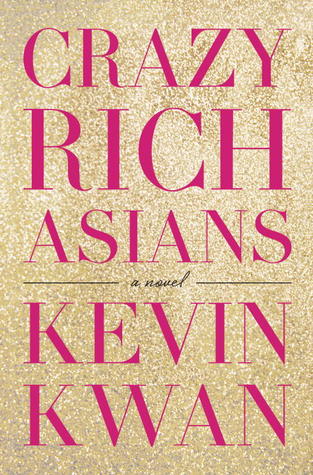
My thoughts on Crazy Rich Asian: As crazy and rich as it can get

Kevin Kwan’s debut novel is simple escapist fare and one of its strengths is bringing the modern Asian culture in a city-country such as Singapore to the literary stage in a easy fun ride. The book chronicles the fictional lives of ultra rich Singaporean-Chinese families through the eyes of Rachel Chu, girlfriend of Nicholas Young, the soon to be heir of the Young fortune. As the family arrives in Singapore for the wedding of the year, Rachel is caught in a whirlwind of gossiping aunties and relatives who’d go to any lengths to break the Young-Chu couple, female acquaintances whose pranks border on the mean, the rush for designer clothes that may or may not have hit the runway yet. Kwan’s writing sucks you into a world of decadent and opulent riches, that are almost sickening; the constant art-designer clothes obsession often tired me out as a reader, as did the some vapidly constructed characters. The plot is riddled with certain twists and turns, intended to produce a dramatic effect but soon falter into cheap, soap opera worthy moments.
Rachel (and her mother’s) naiviety is laughably endearing at the beginning.  She has no idea that she’s dating the much sought after Young, and soon after learns to accept the truth of the private jets, the star hotel accommodations and the palace like housing in which he grew up. What is however, very puzzling, is how unconvincing Nick Young is painted as a man who feels no attachment to his enormous wealth and jet-setting lifestyle and is happily struggling for academic tenure in the US. Not every young man with a sizable fortune preys solely on his inheritance, yet Young’s motivation to live life on his own terms is poorly fleshed out. One character that does stand out is that of the husband of Astrid (I do not remember his name now), who fakes an affair, though in a cowardly manner, to break away from the materialistic family he has married into. You almost end up feeling bad for the poor guy, when his computer technology skills are engaged during many a family dinner to sort out wifi problems and misfiring ovens with Peking ducks.
Beneath all the riches and gourmet food discussions, lies a faint, unsatisfactory dialog on the social hierarchy in Singaporean-Chinese society. The class structure discourages the intermingling of lineages, whose family fortunes can be traced back through generations thus making one practically royalty, with that of those who would be considered common-man. This being an interesting aspect of their social lives remains unexplored and Kevin Kwan may have done well to have discussed this with more spirit and acumen.
Image result for crazy rich asians

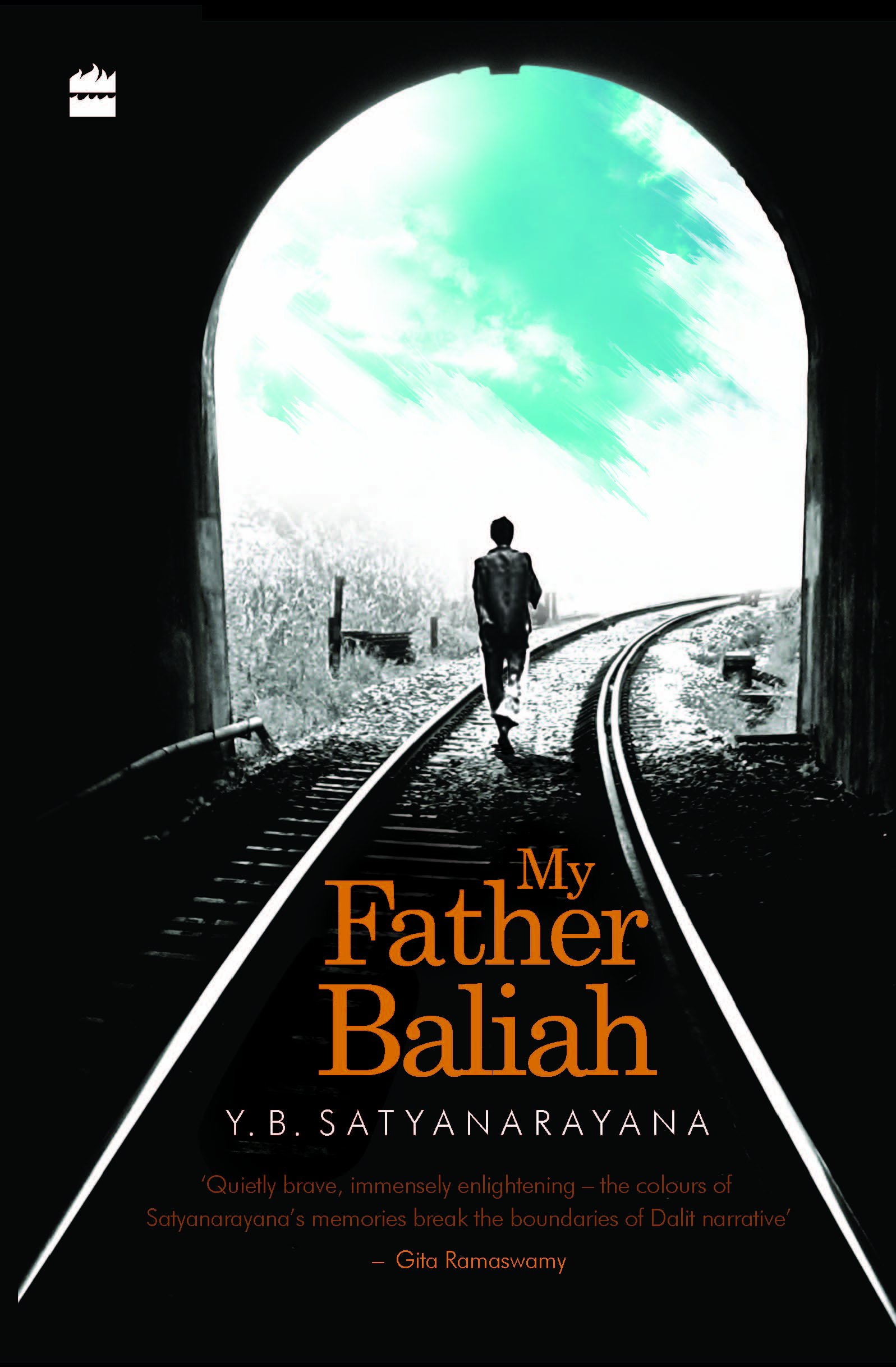
My Father Baliah-A story of emancipation in modern India

The book “My father Baliah” by Y. B Satyanarayana is an eyeopening account of the struggles of the Dalit Yelukati family in rising above impoverishment after generations of segregation and untouchability. The titular father Baliah utilizes the tool of education as a weapon of empowerment. His focus is razor sharp, he understands the power of education as way of ensuring his children break out of the cycle of caste-based oppression and despite setbacks such as failing papers and grades, encourages them to pursue postgraduate studies.
The author Sathiah is born into a large family, as it was with families of those times, and his father Baliah throughout his working life, remains employed at the lower levels of the railways. The role of the railways of the British Raj in securing livelihoods, albeit risky ones, for the Dalit people is explored in great detail. Being a part of the mixed Railways colony and living among other caste Hindus was possibly imperative in breaking down the walls of untouchability at least in the cities. As Sathiah and his brothers get employed, the family and their lifestyles evolve and this is detailed through changes in their food from jowar roti and chilli paste to the inclusion of vegetables and wheat roti. These changes are not confined to food and technology alone and are reflected in the names the author and his siblings later adopt. Sathiah changes his name to Satyanarayana at the behest of a mentor who suggests that this would erase the caste inflections of his name and thereby allow him to build his career without his Dalit origins weighing him down.
In the most poignant stretch in the book, Sathiah  implores his readers to empathize with the Dalit struggles with education, he explains the Dalit mind as one that needed to be slowly acclimatized to education and learning as centuries of dehumanizing bonded labour, disenfranchisement and debilitating inferiority complex meant that the spirit of learning and questioning remained shackled within themselves. This intensely personal account is peppered with the accounts of well-wishers and the detractors. At every stage Sathiah acknowledges the support of officers of British Raj, the Mullah who introduces his father to the alphabet, the upper caste friends and the school teachers who played an important role in shaping his life. The author does not caricature or villainize the enforcers of the caste system and instead adopts a benevolent tone in addressing them as people who do not know any better. And so is the story surprisingly apolitical, the book makes its way through decades of turbulent Indian politics and yet, the focus remains on the struggles of the Yelukati family. It takes a while to get used to the style in the book, the author narrates small nuggets of information which seem to lead to something, for instance, at one point, the author and his brother are travelling ticketless by train and have to quickly get off as the TTR comes for a check, or like the time his father moves back to the village to reclaim their inheritance and then you expect details of the court case. There is a sense of the incident leading to some tension which is quietly resolved in a few paragraphs. In this sense, the book reads more like a diary and not the sprawling generational saga that I had thought it would be.
To sum up, the book is a gripping fascinating account that throws much needed light on the plights and struggles of Dalit people in independent India. A must-read!